You are here

Facility Use

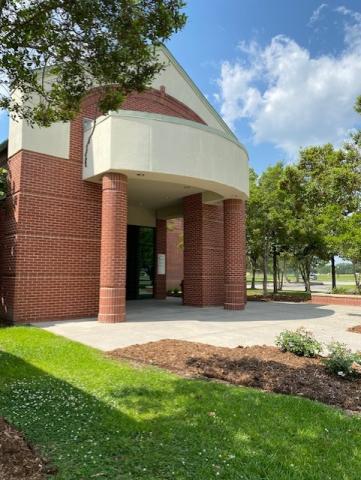
Photo: Abdalla HallAbdalla Hall primarily supports research and training for programs located within the building. It is not to be used for conducting academic classes or student-related or personal events. The use of facilities and associated equipment within the building is generally reserved for events sponsored or co-sponsored by University programs assigned to the building.

Upon availability and approval, designated areas can be reserved for events sponsored by tenants, university departments/organizations, and other outside organizations/groups.

To allow ample time for obtaining approvals, an “Event Request Form” and “University Police Security Contract” must be completed and submitted to the Abdalla Hall University Liaison, along with certificates of insurance meeting the University’s requirements, at least two (2) weeks before a scheduled event and/or four (4) weeks prior for events that require additional approvals for security and/or alcohol. The sponsoring department/organization representative (Event Host) is responsible for reviewing the “Terms and Conditions of Use” and for compliance. The Event Host requesting the use of any area and/or associated equipment must abide by and will be held responsible for ensuring all terms and conditions are followed. Failure to abide by any of the terms and conditions could result in that department/organization losing facility privileges.

Procedures for Requesting Use/Receiving Authorization

(Requests must have all required documents attached, or the request will be returned without approval.)

1. Review the “Terms and Conditions of Use” and “Exhibit A Campus Events Framework”.

2. Complete all applicable sections of the “Event Request Form”.

3. Complete the contact information and event details sections of the “University Police Security Contract.”

4. Complete an “Alcohol Approval Request” (if alcohol will be provided).

5. Provide certificates of insurance following the University’s “Exhibit B Insurance Requirements for Lessees.”

6. Email all required documents to the Abdalla Hall University Liaison at iri@louisiana.edu.

Documents

COVID-19 Limits and Restrictions are subject to change. All guidelines in place during the scheduled event MUST be followed. Check with the Abdalla Hall University Liaison before the event for the latest limits and restrictions.

Learn More About Our Research Centers

Accessible Healthcare through AI-Augmented Decisions

The National Science Foundation approved the Accessible Healthcare for AI-Augmented Decisions (AHeAD) Center to move forward with planning in July 2025. Its mission brings university researchers and healthcare industry stakeholders together to conduct foundational research needed to create usable AI-augmented decision support tools that enhance healthcare delivery, improve patient outcomes, and reduce costs.AHeAD is a multi-university research partnership between UL Lafayette (lead), Tulane University, the University of Florida, and Georgia Tech. Tampere University in Finland has expressed interest in becoming a university partner.

Meet AHeAD Director, Dr. Raju Gottumukkala


Center for Applied Artificial Intelligence

The Center for Applied Artificial Intelligence (CAAI) is dedicated to pursuing use-driven AI research, training an AI-ready workforce, and creating a platform to accelerate innovation to support the local economy. The center serves as a hub where AI researchers, domain experts from diverse disciplines, industry specialists, and community stakeholders come together to address real-world challenges.

Meet CAAI Director, Raju Gottumukkala, PhD.


Center for Critical Infrastructure Cybersecurity (CCIC)

The Center for Critical Infrastructure Cybersecurity (CCIC) brings together multiple and diverse experts from across the University to help our nation prepare for cyberattacks that may impact the country's critical infrastructure.CCIC was founded to examine cybersecurity from the perspective of the cascading impact of a significant cyber incident on the nation’s critical infrastructure, such as that experienced by the 2015 cyberattack on the Ukrainian Power Grid. The Center for the Study of Existential Risk at Cambridge University, UK, now places cyberattacks as a “blue sky hazard” that can take an entire power grid down for a prolonged period. A consequence of such an attack would extend beyond the loss of data; it could completely disrupt the functioning of society, much like a large-scale natural disaster.

 Meet CCIC Director Arun Lakhotia, PhD

Louisiana Business Emergency Operations Center

The NIMSAT Institute manages the daily operations of the Louisiana Business Emergency Operations Center (LABEOC). The center assists Louisiana businesses and non-profit organizations in disaster preparedness, response, and recovery efforts to ensure community stability, resilience, and economic revitalization.

Louisiana Center for Health Innovation

The Louisiana Center for Health Innovation (LCHI) is dedicated to advancing healthcare innovation by developing research, education, and engagement activities that foster collaboration among academia, industry, and the community. This commitment aims to improve healthcare outcomes, promote health equity, and develop a skilled workforce that meets the needs of Louisiana and beyond.


Learn more about LCHI and meet the Director, Gabriela Wilson, PhD, MSc, FHIMSS, FIAHSI, SNAI.


National Incident Management Systems and Advanced Technologies

The National Incident Management Systems and Advanced Technologies (NIMSAT) Institute focuses on enriching public-private partnerships and advanced information technologies to enhance the national resiliency for a full range of potential disasters. Our mission is to save human lives. Our experienced emergency management team joins university researchers and technology experts to build a more resilient America through education, training, outreach, and operational support, empowering the homeland security and emergency management community.